
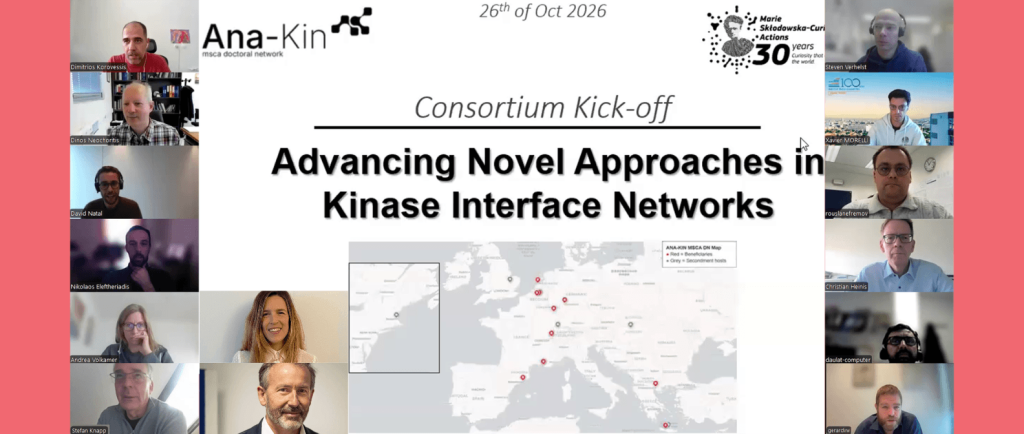
Advancing Novel Approaches in Kinase Interface Networks

NEWS

Official Kick-Off: the ANA-KIN journey has begun!
Official Kick-Off: the ANA-KIN journey has begun!News

Official Kick-Off: the ANA-KIN journey has begun!

Chaired by Network Coordinator Dimitris Korovesis, the online meeting gathered the beneficiary Principal Investigators to review the exceptional volume of applications received, finalize the scientific roadmap for the 12 doctoral…
October 28, 2026

ABOUT ANA-KIN

ANA-KIN is a premier Horizon Europe MSCA Doctoral Network uniting 11 beneficiaries and 9 strategic partners across 8 European countries to train a cohort of 12 outstanding Doctoral Candidates (DCs).

Our mission is to redefine protein kinase targeting in precision oncology by pioneering a fundamental shift in drug discovery methodology.

While more than 85 kinase inhibitors are currently approved for clinical use, their long-term therapeutic efficacy remains constrained by off-target promiscuity at the conserved ATP-binding cleft and the rapid emergence of resistance mutations. To overcome these critical bottlenecks, ANA-KIN trains a new generation of researchers to pioneer kinase drug discovery by moving beyond the ATP site toward non-conserved interfaces—specifically the phosphorylation substrate site and the dimerization interface.

Integrating chemical biology, structural biophysics, cheminformatics, AI-driven discovery, and cell biology in close collaboration with global industrial partners, the program equips doctoral researchers with advanced workflows and modular assays. By providing these specialized tools and fostering an interdisciplinary mindset, ANA-KIN empowers its researchers to design highly selective, resistance-resilient cancer therapies, strengthening Europe’s technological sovereignty in the oncology drug space

OUR NETWORK

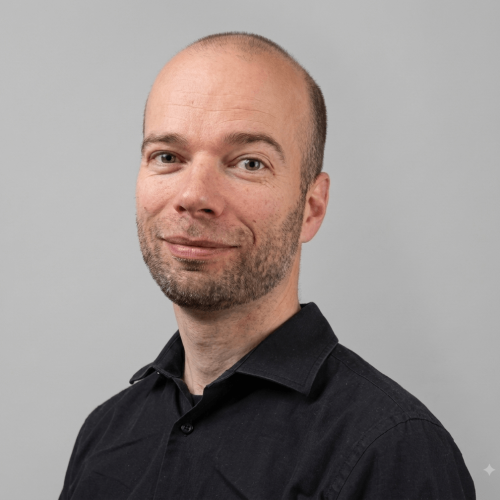
Dimitris Korovesis

Aristotle University of Thessaloniki (AuTh) - Coordinator

Dimitris Korovesis is an Assistant Professor of Biochemistry at Aristotle University of Thessaloniki and an interdisciplinary chemical biologist whose research integrates organic synthesis, advanced imaging, chemical proteomics and disease-model biology. He will supervise DC1 (TR-FRET dimerization reporters for EGFR, BRAF and LTK under ATP-locked conditions).

His work spans kinase drug discovery beyond conventional active-site inhibition, photoaffinity and activity-based probe development, proteome-wide target/selectivity profiling and targeted protein degradation.

His laboratory applies these approaches to cancer and neurodegeneration, with particular interests in ALS, oxidative proteotoxic stress, mitochondrial quality control and OxiPTACs, using mammalian systems and complementary models such as C. elegans. His independent research programme is supported by competitive European and US funding, including an NIH/NCI IMAT R61 award, a U.S. Department of Defense ALS Research Program Therapeutic Idea Award, and MSCA/ERA funding


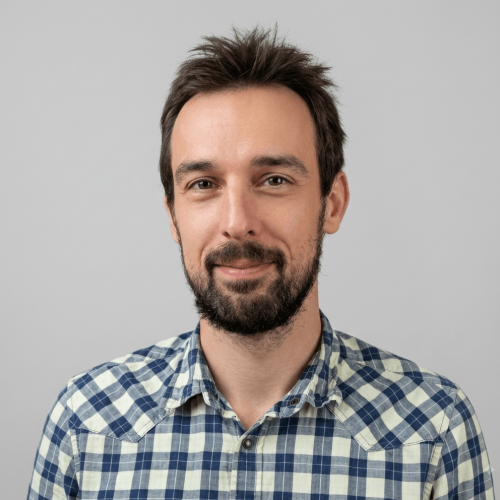
Steven Verhelst

Katholieke Universiteit Leuven (KUL)

Prof. Dr. Steven Verhelst will supervise DC2 (Cleavable-linker bisubstrate FRET assays with covalent ATP anchors).

He received his PhD in Chemistry at Leiden University and performed post-doctoral research at the Stanford University, School of Medicine. He started his own laboratory at the Technical University Munich as an Emmy Noether group leader in 2008. In 2014, he moved to the Leibniz Institute for Analytical Sciences ISAS in Dortmund, Germany, as a group leader in chemical proteomics, a position that he kept until 2023. Since 2015, he is also appointed as associate professor in chemical biology at the Department of Cellular and Molecular Medicine of the University of Leuven, Belgium. He received tenure in 2017 and was promoted to full professor in 2024.

Nikolaos Eleftheriadis

University of Crete (UoC)

Nikolaos Eleftheriadis will co-supervise DC3 (Single-molecule FRET maps of kinase oligomerization and ligand-biased conformations).

He graduated with BSc in Chemistry from Aristotle University of Thessaloniki in Greece. In June 2012, he graduated with MSc in Organic Chemistry from Aristotle University of Thessaloniki in Greece. He was awarded for outstanding performance of the MSc degree from Alexandrou Foundation. In December 2012, he moved to Groningen to pursue his doctoral degree in the division of Chemistry and Pharmaceutical Biology under the supervision of Prof. dr. Frank J. Dekker. He obtained his PhD with the distinction cum laude. His research focused on the inhibition and detection of 15-lipoxygenase, an enzyme which plays a crucial role in the biosynthesis of inflammatory signalling molecules.

Academic Career

After his PhD, he joined the group of Molecular Microscopy (University of Groningen, The Netherlands) as a postdoctoral researcher. Then, for his second postdoctoral research, Dr. Eleftheriadis joined the Molecular Bacteriology group (KU Leuven, Belgium). He was awarded with the prestigious postdoctoral fellowship (MSCA, FWO) (top 5% in Belgium). His focus was to define and understand the structural dynamics (using smFRET) of proteins that play an important role in bacterial pathogenicity, in order to design inhibitors as novel antibiotics. In addition to his scientific achievements, he founded ChessBioChem, a unique platform that enables the connection of research groups around the world to establish drug discovery projects based on their mutual expertise. In 2021, he was selected for an Assistant professor position in Biochemistry of the Chemistry Department at the University of Crete.

Rouslan Efremov

Free University of Brussels (VIB)

Ruslan Efremov will supervise DC4 (Cryo-EM blueprints of kinase dimerization and substrate-site architecture).

The goal of our research is to understand how biological molecular machines work. We use single particle cryogenic electron microscopy (cryo-EM) to solve high-resolution structures of molecular machines and visualise protein conformations associated with their function. In order to advance beyond state of the art we invest efforts in developing new approaches for preparation of cryo-EM samples using microfluidics. We are an interdisciplinary team consisting of structural biologists and engineers working together towards understand how incredibly efficient and versatile molecular machines evolved by within living organisms work.

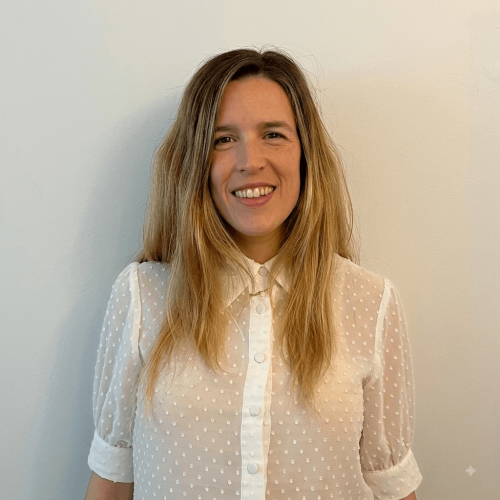
Marta Barniol-Xicota

Pompeu Fabra University (UPF)

Dr. Marta Barniol-Xicota will supervise DC5 (SMALP-stabilised kinase reconstitution to bridge structural and cellular states).

She is the director of the Peptide Facility UPF-PRBB. She is a medicinal chemist/chemical biologist and group leader at the Universitat Pompeu Fabra (UPF, Barcelona), where she heads the Chemical Biology & Peptide Theranostics Lab. Her research focuses on developing peptide- and probe-based tools to study proteases and other enzymes implicated in cancer and inflammatory disease, with a special interest in intramembrane proteases. By combining medicinal chemistry, peptide engineering and molecular biology, her group designs macrocyclic substrates, activity-based probes and phage-display platforms to discover new biomarkers and enable more selective diagnostics and therapies.

Marta obtained her PhD in Medicinal Chemistry from the University of Barcelona, where her work on antiviral small molecules was recognized with the university’s premi extraordinari de doctorat for best doctoral thesis. During her postdoctoral research at KU Leuven and Stanford University, she pioneered chemically modified phage-display methods to identify highly selective macrocyclic substrates and covalent inhibitors, work that has led to publications in leading journals such as Journal of the American Chemical Society and Chemical Science. Her scientific trajectory has been recognized with several competitive awards, including the Premi al Talent Científic Emergent from the Societat Catalana de Química, the Incentive Award of the Belgian Chemical Societies, and distinctions from international schools and foundations. In 2024 she was also honored by SportLife Iberia and the Carrera de la Mujer for her inspiring role as a woman scientist, reflecting her commitment not only to cutting-edge research but also to mentoring and scientific outreach.

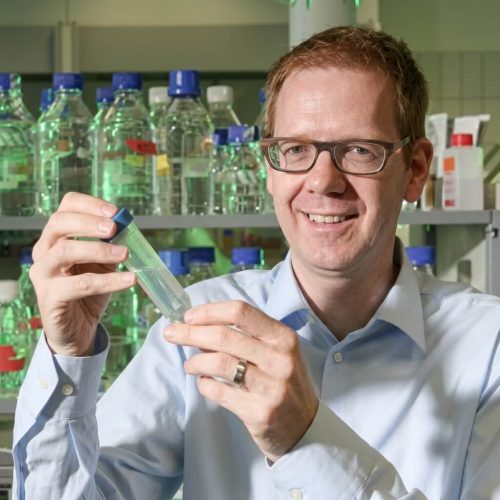
Christian Heinis

École Polytechnique Fédérale de Lausanne (EPFL)

Prof. Christian Heinis will supervise DC6 ((Bi)cyclic peptide discovery against dimerization and substrate interfaces).

The main goal of Christian Heinis’ research is the development of therapeutics based on cyclic peptides. Towards this end, his laboratory is developing methods for synthesizing and screening large combinatorial libraries of cyclic peptides.

Christian Heinis has studied biochemistry/chemistry at the ETH Zurich. After a PhD in the research group of Prof. Dr. Dario Neri at ETH, he did two post-docs, the first one with Prof. Dr. Kai Johnsson at the EPFL and the second one with Sir Gregory Winter at the LMB-MRC in Cambridge, UK. In 2008 he started as Assistant Professor at EPFL (supported with an SNSF professorship) and was promoted in 2015 to Associate Professor.

Christian is a co-founder of Bicycle Therapeutics (BCYC) and Orbis Medicines.

Xavier Morelli

Cancer Research Center of Marseille (CNRS)

Xavier Morelli will supervise DC7 (PPI-biased small-molecule discovery for kinase regulatory interfaces).

Xavier Morelli trained in Structural Biochemistry and Biophysics at the University of Paris XI (France). During his PhD (1996–1999), he combined molecular modelling and biological NMR to investigate protein–protein interactions (PPIs), before joining Harvard Medical School as a postdoctoral fellow (BIDMC, 1999–2002). In 2002, he was recruited by the French National Centre for Scientific Research (CNRS), where he is currently Director of Research.

In 2010, he established his research group at the Cancer Research Center of Marseille (CRCM). He currently co-leads the Integrated Structural and Chemical Biology (iSCB) team, which combines chemoinformatics, structural biology, biophysics, chemical biology, medicinal chemistry, high-throughput screening and preclinical studies to identify, characterize and target PPIs in oncology and immunotherapy. He is also Director of HiTS, a nationally accredited High-Throughput Screening platform.

Xavier Morelli has held numerous scientific advisory positions, including membership of a national committee of Fondation ARC, Chair of the Scientific Committee of Canceropôle PACA, Chair of the Scientific Committee of “Département des Alpes Maritimes”, and membership of the GIS IBiSA Scientific Committee. He currently serves on the Board of Directors of Canceropôle PACA, the Scientific Council of the Faculty of Pharmacy, the CNRS National Committee (CoNRS, Section 22) and the Scientific Council of Eurobiomed.

Alongside his academic activities, he is strongly involved in innovation and technology transfer. He heads the Technology Transfer and Valorization Department at Institut Paoli-Calmettes (IPC) and oversees its non-clinical industrial partnerships. He is also a CNRS Innovation Ambassador and technology-transfer representative within PUI Provence. Finally, he is co-founder of ORTHOS Therapeutics, a biotechnology start-up developing a novel therapeutic approach for acute lymphoblastic leukaemia based on research originating from his laboratory.


Constantinos Neochoritis

University of Crete (UoC)

Dr Constantinos Neochoritis will supervise DC8 (Design and synthesis of MCR-based dimerization inhibitors).

He is an Associate Professor of the Chemistry Department at the University of Crete, specializing in multicomponent reactions, drug design and new modalities, with over 80 peer-reviewed publications and an h-index of 25. He has achieved major distinction in his field, highlighted by his nomination as Fellow from Chemistry Europe (2026), the EurJOC-AGH Award (2023) for best early career research article, the Hildegard-Zervas Award (2022) from the National Academy of Science of Greece for pioneering contributions to organic chemistry and selection as a global "YourJOC" Emerging Talent by Wiley and EurJOC (2020). Holding a PhD from the Aristotle University of Thessaloniki and postdoctoral training from the University of Groningen, his background bridges academic excellence, evidenced by key research in Nature Communications, Organic Letters and Chemistry – A European Journal, with executive leadership as former CEO of TelesisPharma B.V. and governance as IUPAC National Representative for Greece.

Andrea Volkamer

Saarland University (SU)

Prof. Dr. Andrea Volkamer will supervise DC9 (Structure-based & ML pipelines for interface-selective hit discovery).

The research focus of Prof. Volkamer is data driven drug design with expertise in method development and application. The group develops methods at the interface of structural bioinformatics and cheminformatics with particular interest in structure-enabled machine learning approaches, applied in the context of computational drug design, especially kinase research, and in silico toxicology.

To further strengthen the location in the area of artificial intelligence to improve drug design, the groups of Andrea Volkamer, Andreas Keller, Rolf Müller, Anna Hirsch and Olga Kalinina are collaborating with the Saarland Informatics Campus and the German Research Center for Artificial Intelligence (NextAID project).


Gerard van Westen

Leiden University (LEI)

Prof. Gerard van Westen will supervise DC10 (Deep-learning for polypharmacology, allosterism and resistance-aware interface design).

Gerard van Westen is a full professor in the Division of Drug Discovery and Safety at the Leiden Academic Centre for Drug Research. He is a member of the interdisciplinary research programme Society, Artificial Intelligence and Life Sciences (SAILS). His main area of research is leveraging artificial intelligence with diverse and large-scale public data (‘big data’) for precision medicine.


Stefan Knapp

Goethe University Frankfurt (GU)

Prof Stefan Knapp will supervise DC11 (Cellular target engagement and pathway modulation in EGFR/BRAF models).

He studied Chemistry at the University of Marburg (Germany) and at the University of Illinois (USA). He did his PhD in protein crystallography at the Karolinska Institute in Stockholm (Sweden) (1996) and continued his career at the Karolinska Institute as a postdoctoral scientist (1996-1999). In 1999, he joined the Pharmacia Corporation as a principal research scientist in structural biology and biophysics. He left the company in 2004 to set up a research group at the Structural Genomics Consortium at Oxford University (SGC). From 2008 to 2015 he was a Professor of Structural Biology at the Nuffield Department of Clinical Medicine (NDM) at Oxford University (UK) and between 2012 and 2015 he was the Director for Chemical Biology at the Target Discovery Institute (TDI). He joined Frankfurt University (Germany) in 2015 as a Professor of Pharmaceutical Chemistry and the Buchmann Institute of Molecular Life Sciences. He remains associated to the SGC as a visiting Professor at Oxford and he is also adjunct Professor of the George Washington University. Since 2017 he is the CSO of the newly founded SGC node at the Goethe-University Frankfurt. His research interests are the rational design of selective inhibitors that target protein kinases as well as protein interactions modules that function as reader domains of the epigenetic code.

Jean-Paul Borg

-

Jean-Paul Borg will supervise DC12 (LTK -dark kinome- cellular models, phosphoproteomics and interface dependency).

Doctor in Pharmacy, certified in Pathology-Biomedical analysis (1995, Marseille), PhD in Immunology (1995, Marseille), Jean-Paul Borg was a post-doctoral fellow at Howard Hughes Medical Institute (Ann Arbor, MI, USA) from 1995 to 1998. From 1998 to 2006, he was an INSERM Senior Investigator and then became Professor of Cell Biology at Aix-Marseille University (since 2006). He is group leader at CRCM since 2004 (20 people). The major part of his scientific career has been focused on elucidating cell signalling pathways (tyrosine kinases, WNT signalling) in solid tumors. He is internationally recognized for his contribution in the field of cell polarity, having discovered major protein networks associated with tumor suppressors (Scribble) and oncoproteins (Erbin, PTK7, VANGL2, PRICKLE).

In parallel to his team leadership, Jean-Paul Borg is the Director of the Marseille Cancer Center (CRCM) hosting his team, a research unit affiliated to University, INSERM and CNRS since 2012 (24 teams, 450 people including 150 permanent staff). The CRCM was restructured under the leadership of J.-P. Borg (merger of three independent centers to build the actual CRCM, obtention of funding to build/renovate two novel buildings of > 7000m2 hosting teams and platforms) in 2012-2017.

Founder & Director of Institute of Cancer & Immunology (Aix-Marseille University) (2019-2024) comprising majors research centers (CRCM, CIML,.>800 people), three faculties (Sciences, Medicine and Pharmacy), and two hospitals (the comprehensive cancer center Institut Paoli-Calmettes and Assistance Publique Hôpitaux de Marseille, two of the largest university-affiliated hospitals in France) to develop a transversal and interdisciplinary care-research-education project in cancer and immunology.

Since 2007, he is the Scientific Director of Institut Paoli-Calmettes. He is currently Senior Member of Institut Universitaire de France and Dean of the Faculty of Pharmacy, Marseille. He is also co-coordinator of Marseille Proteomic Platform, a national infrastructure, hosted by CRCM since 2008 (20 people).

ASSOCIATED PARTNERS

Dr. Konstantinos Papachristos, Dr. Graeme Robb, Dr. Ian Storer
Dr. Henrik Möbitz
Dr. András Kotschy
Prof. Thomas Wales
Dr. Joshua Salafsky
Dr. Dimitris Koutsioulis
Prof. Benjamin Cravatt
Dr. Xavier Morelli, Dr. Yves Collette, Dr. Thomas Miller, Dr. Philippe Roche, Dr. Elsa Garcin
Prof. Rita Derua
Prof. Alex Bullock, Dr. Tryfon Zarganes-Tzitzikas

HOW TO APPLY

  • Formal application procedures, eligibility criteria, and recruitment timelines will be announced on this website in early September.
  • Mobility rule (MSCA Requirement)
    Applicants of any nationality may apply. Under MSCA mobility rules, eligibility is based on where the applicant has lived or carried out their main activity, not on nationality. For the available positions (see below), applicants must not have resided or carried out their main activity in the country they are applying for more than 12 months during the 36 months immediately before recruitment (1 December 2023 – 30 November 2026).

AVAILABLE POSITIONS

DC1

TR-FRET dimerization reporters for EGFR, BRAF and LTK under ATP-locked conditions

WP1

Objectives: Engineer TR-FRET dimer reporters using type-I AfBPs as donors/controls; establish Z’-validated windows across 3 kinases; Build orthogonal counterscreens to exclude ATP-pocket interference and optical artifacts; Define comparative dimerization fingerprints under ligands (type-I AfBP donors vs controls) to standardise cross-lab interpretation; Publish modular SOPs transferable to other kinases.

Expected results: Validated TR-FRET reporter set with per-kinase Z’ benchmarks, an assay-interference taxonomy (optical/aggregation/ATP-leak) and FAIR-deposited benchmark datasets; methods/protocol paper + dataset.

Secondments: NU: HDX-MS on ATP-locked vs apo kinases (M10–12; 3 months); EPFL: Assay-based peptide-hit triage (M28–32; 5 months).

Integration: Provides WP1 “common filter”; feeds WP3 hit triage and WP2 mechanistic signature mapping.

Interdisciplinarity: Combines chemical biology (AfBPs), assay engineering and biophysics (HDX) and phage-display screening

DC1 (WP1) — Host: AuTh (GR) – Prof Korovesis (Start date: M4)

DC2

Cleavable-linker bisubstrate FRET assays with covalent ATP anchors

WP1

Objectives: Design and synthesise AfBP-anchored bisubstrate probes across 3 kinases with cleavable linkers and FRET pairs; establish substrate-displacement readouts that distinguish ATP-site binders from substrate-site competitors; benchmark transferability; implement AfBP-based counterselection; publish kit-style SOPs.

Expected results: A generalisable bisubstrate FRET format with construct-design rules, per-kinase benchmarking datasets and open, transferable SOPs; short methods paper + technical note demonstrating ATP-occlusion vs substrate-displacement discrimination; FAIR-deposited data.

Secondments: UoC: smFRET comparison of apo vs ATP-locked kinases (substrate-cleft geometry) (M10–12; 3 months); CNRS: Assay-based small-molecule hit triage for substrate binders (M28–32; 5 months).

Integration: Complements DC1 by providing the second WP1 “common filter”; supplies WP3 screening cascades and WP4 validation with substrate-site readouts.

Interdisciplinarity: Combines chemical biology, assay engineering, HTS screening and biophysics (smFRET, kinetic profiling).

DC2 (WP1) — Host: KUL (BE) – Prof Verhelst (Start date: M4)

DC3

Single-molecule FRET maps of kinase oligomerization and ligand-biased conformations

WP2

Objectives: Generate site-specific labelled EGFR/BRAF/LTK constructs; quantify monomer↔dimer equilibria and conformational states under AfBP locking; derive FRET-signature fingerprints predictive of interface-inhibitor activity; propose interface mutants as mechanistic controls for WP1 and WP3.

Expected results: A smFRET atlas across three kinases, including state distributions, kinetic-transition parameters and mutant-based mechanistic controls; open analysis pipelines and FAIR-released datasets; a methodological paper integrating smFRET with ATP-site–locked conformational mapping.

Secondments: VIB: Cryo-EM correlation of FRET-defined states (M19–22; 4 months); AZ: MD simulations for atomistic validation of conformational transitions (M30–32; 3 months).

Integration: Provides mechanistic fingerprints for WP1 assay calibration and guides WP3 hit prioritisation; anchors structural interpretation across WP2 and supports WP4 functional analysis.

Interdisciplinarity: Integrates single-molecule biophysics, structural biology (cryoEM) and computational modelling

DC3 (WP2) — Host: UoC (GR) – Prof Eleftheriadis (Start date: M4)

Host institution: University of Crete
DC4

Cryo-EM blueprints of kinase dimerization and substrate-site architecture

WP1

Objectives: Reconstitute EGFR and LTK (SMALPs) and soluble BRAF complexes; capture AfBP-locked conformations; map dimer and substrate interfaces; identify hotspot residues that report on interface engagement; cross-validate structural classes with smFRET states and feed geometric constraints back to WP1 assay design.

References: ³² Barniol-Xicota, M. et al. Commun. Biol. 4, 218 (2021); ³³ Barniol-Xicota, M. et al. J. Am. Chem. Soc. 140, 14557–14561 (2018); ³⁴ Merz, M. L. et al. Nat. Chem. Biol. 20, 624–633 (2024); ³⁵ Kong, X.-D. et al. Nat. Biomed. Eng. 4, 560–571 (2020); ³⁶ Kale, S. S. et al. Nat. Chem. 10, 715–723 (2018); ³⁷ Bosc, N. et al. ACS Chem. Biol. 15, 1566–1574 (2020).

Expected results: Medium-resolution cryo-EM maps and focused classifications of low-occupancy interface states; a hotspot/interfacial-geometry map for all three kinases; a methodological paper on SMALP-enabled cryo-EM for dynamic kinase assemblies plus FAIR-deposited structural classes and metadata.

Secondments: UPF: SMALP membrane-reconstitution workflows (M19–22; 4 months); INS: In-cellulo validation (M30–32; 3 months)

Integration: Supplies structural determinants guiding WP1 assay geometry, calibrates WP2 smFRET interpretations and defines actionable interface hotspots for WP3 ligand optimisation.

Interdisciplinarity: Combines cryo-EM, membrane-protein biophysics (SMALPs) and integration with smFRET and cellular validation.

DC4 (WP2) — Host: VIB (BE) – Prof Efremov (Start date: M4)

DC5

SMALP-stabilised kinase reconstitution to bridge structural and cellular states

WP2

Objectives: Develop clickable/biotinylated SMALP nanodiscs for EGFR and LTK; quantify dimerization and conformational engagement using TR-FRET and smFRET; define how AfBP-locking reshapes membrane-embedded kinase dynamics; identify SMALP conditions that best approximate cellular phenotypes; provide a biophysical “translation layer’’ linking WP1/WP2 assays to WP4 cellular readouts.

Expected results: A SMALP-based native-membrane assay platform preserving functional kinase states; comparative TR-FRET/smFRET datasets benchmarked against soluble controls; protocols and datasets deposited as FAIR resources; a platform-style paper linking membrane-embedded conformations to cellular signatures.

Secondments: UoC: smFRET benchmarking of SMALP-incorporated kinases (M19–22; 4 months); KUL: Assay-harmonisation and cross-platform alignment with WP1 pipelines (M30–32; 3 months).

Integration: Provides membrane-native reference states for WP1 assay calibration, informs WP2 structural and dynamic interpretations and aligns WP3 discovery outputs with WP4 cellular behaviour.

Interdisciplinarity: Combines membrane biophysics (SMALPs), smFRET, assay integration and cross-WP methodological harmonisation.

DC5 (WP2) — Host: UPF (ES) – Prof Xicota (Start date: M8)

Host institution: Pompeu Fabra University
DC6

(Bi)cyclic peptide discovery against dimerization and substrate interfaces

WP3

Objectives: Generate and screen highly diverse combinatorial (bi)cyclic-peptide libraries against EGFR, BRAF and LTK regulatory surfaces under ATP-locked conditions; enrich selectively for non-ATP binders using WP1 filters; map minimal binding motifs via alanine scanning/truncations; derive early SAR and advance top series toward membrane-permeable, cell-compatible variants.

Expected results: At least two validated peptide chemotypes with interface specificity; a pre-lead data package and a publishable study demonstrating interface-targeting peptide scaffolds.

Secondments: UoC: MCR-enabled peptide diversification and conjugate design (M20–23; 4 months); SU: ML-based sequence prioritisation and SAR prediction workflows (M31–33; 3 months).

Integration: Primary peptide-hit generator for WP4 cellular validation; tightly coupled to WP2 (structural hotspots, smFRET fingerprints) and WP1 (dimer/substrate-site assay readouts) for iterative optimisation.

Interdisciplinarity: Combines combinatorial chemistry, peptide engineering, discovery and ML-assisted design.

DC6 (WP3) — Host: EPFL (CH) – Prof Heinis (Start date: M8)

DC7

PPI-biased small-molecule discovery for kinase regulatory interfaces

WP3

Objectives: Screen focused PPI and fragment libraries under ATP-locking conditions; apply optical-interference counterscreens and ATP-site competition to confirm interface binding; integrate HTRF FRET probes; derive interface-anchored pharmacophores and iterate fragment follow-ups guided by WP2 hotspots and smFRET signatures; develop chemotypes with PPI-compatible profiles; optimize hit series using ChemoDOTS and structure-based growing to generate interface-selective hit-to-lead candidates.

Expected results: At least two small-molecule series with assay-confirmed interface engagement; a methodology paper on interface-directed triage and fragment-to-lead progression.

Secondments: GU: In-cellulo engagement and functional validation (M20–23; 4 months); LEI: AI-driven prioritisation and enrichment modelling (M31–33; 3 months).

Integration: Primary small-molecule discovery stream feeding WP4; tightly coupled to WP1 interference counterscreens and WP2 structural/mechanistic constraints.

Interdisciplinarity: Combines PPI-focused screening, biophysics-guided triage, in cellulo validation and AI-assisted optimisation.

DC7 (WP3) — Host: CNRS (FR) – Prof Morelli (Start date: M8)

DC8

Design and synthesis of MCR-based dimerization inhibitors.

WP3

Objectives: Design functionalised scaffolds using MCR chemistry; synthesise medium-sized, structurally diverse libraries biased for PPI/interface engagement; perform iterative SAR cycles (hit-to-lead), scaffold hopping and optimisation of physicochemical and conformational properties; profile all compounds in WP1 TR-FRET and bisubstrate assays under ATP-locking conditions.

Expected results: A rationally assembled small-molecule library, ≥1–2 validated chemotypes with interface-modulating activity and scalable lead compounds suitable for WP4 mechanistic and cellular evaluation.

Secondments: Servier: High-throughput analogue synthesis and hit-refinement support (M20–23; 4 months); GU: Cellular target-engagement and pathway-level validation (M31–33; 3 months).

Integration: Provides binder feed for WP4; tightly linked to WP1 counterscreens and WP2 mechanistic constraints.

Interdisciplinarity: Spans synthetic/medicinal chemistry (MCR scaffolds), chemical biology (assay-guided SAR) and AI-supported design, with translational validation in cell biology

DC8 (WP3) — Host: UoC (GR) – Prof Neochoritis (Start date: M8)

Host institution: University of Crete
DC9

Structure-based & ML pipelines for interface-selective hit discovery

WP3

Objectives: Build docking, shape-phonon and ML models that integrate WP2 cryo-EM/smFRET states with WP1 assay outcomes; train classifiers to penalise ATP-like geometries and prioritise interface-compatible scaffolds; generate prospective design hypotheses and SAR expansions for DC6–DC8 discovery streams.

Expected results: Open, validated modelling pipelines and benchmark datasets; a methods paper demonstrating improved enrichment for shallow kinase interfaces; a prospective case study showing hit-rate uplift in WP3 screens.

Secondments: EPFL: Experimental grounding in peptide interface binders (M20–23; 4 months); KUL: Testing DC9-prioritised designs in the bisubstrate assay (M31–33; 3 months).

Integration: Provides the central computational design loop linking WP2 structural signatures, WP1 assay labels and WP3 screening/optimisation workflows.

Interdisciplinarity: Combines cheminformatics & machine learning, phage-display screening and assay-bases hit triage.

DC9 (WP3) — Host: SU (DE) – Prof Volkamer (AI/ML) (Start date: M8)

Host institution: Saarland University
DC10

Deep-learning for polypharmacology, allosterism and resistance-aware interface design

WP3

Objectives: Develop DL architectures integrating text-mined, cheminformatic and biophysical descriptors to predict interface binding, allosteric signatures and resistance liabilities; jointly learn across peptide and small-molecule modalities; generate hybrid peptidomimetic design hypotheses; deliver consortium-wide prioritisation dashboards for hit triage and analogue selection.

Expected results: A resistance-aware AI workflow for non-ATP interface ligands, accompanied by public models/datasets and interpretable feature maps; prospective design case studies demonstrating improved optimisation trajectories in WP3 campaigns.

Secondments: VIB: Structural-class extraction and conformational-feature mapping from cryo-EM datasets (M20–23; 4 months); Skylight: SHG profiling of ligand-induced conformational changes (M31–33; 3 months).

Integration: Provides resistance- and allosterism-aware prioritisation engines for WP3 and closes the computational–mechanistic feedback loop with WP2.

Interdisciplinarity: Bridges AI/ML, cheminformatics, structural biology (cryo-EM constraints) and chemical-probe/screening environments.

DC10 (WP3) — Host: LEI (NL) – Prof van Westen (AI/ML) (Start date: M8)

Host institution: Leiden University
DC11

Cellular target engagement and pathway modulation in EGFR/BRAF models

WP4

Objectives: Establish NanoBRET and CETSA cellular lines for EGFR/BRAF; quantify intracellular engagement of top peptide and small-molecule interface hits; map pathway rewiring under interface modulation and benchmark against ATP-site inhibitors; establish resistance-evolution baselines; define cell-level go/no-go criteria to guide WP3 optimisation.

Expected results: Quantitative NanoBRET/CETSA engagement datasets; pathway-profiling resource and comparative analysis versus ATP-site drugs; validated decision-gates for chemical-series advancement; a resistance-trajectory dataset to benchmark the adaptive resilience of interface modulators.

Secondments: AuTh: Assay-based hits refinement (M20–23; 4 months); LEI: AI-assisted resistance-modelling inputs (M31–33; 3 months).

Integration: Provides the translational anchor for the consortium; feeds engagement and signalling constraints back to WP3 design streams and WP1 assay tuning.

Interdisciplinarity: Combines chemical biology, quantitative cell signalling, resistance biology and AI-guided interpretation.

DC11 (WP4) — Host: GU (DE) – Prof Knapp (Start date: M8)

Host institution: Goethe University Frankfurt
DC12

LTK (dark kinome) cellular models, phosphoproteomics and interface dependency

WP4

Objectives: Establish LTK cellular systems and define whether signalling depends on dimerization/interface integrity; generate interface-disrupting mutants and quantify their effects on activation and pathway output; map substrate motifs via quantitative phosphoproteomics; validate AfBP engagement; measure how interface-targeting ligands reshape signalling networks; provide a generalizable blueprint for extending interface-centric analysis to other dark-kinome RTKs.

Expected results: First mechanistic map of LTK; public phosphoproteomic and signalling dataset; a cellular engagement + pathway paper defining interface dependency and substrate specificity.

Secondments: KUL (Prof Derua): Phosphoproteomics optimisation and workflow refinement (M20–23; 4 months); AZ: MD simulations to interpret structural/dynamic determinants of LTK regulation (M31–33; 3 months).

Integration: Establishes the mechanistic basis of an understudied RTK; informs WP1/DC2 bisubstrate-probe design and provides structural/functional constraints for WP3 optimisation and WP4 comparative benchmarking.

Interdisciplinarity: Combines cell signalling, phosphoproteomics, chemical biology and computational biophysics.

DC12 (WP4) — Host: INS (France) – Prof Borg (Start date: M8)

Why settle for ordinary binding sites? Step outside the ATP cleft with ANA-KIN, master non-conserved interfaces, and launch your research career across 8 European countries.